![Anecdotal Records in Early Childhood Education [PRO]](https://res.cloudinary.com/liaison-inc/image/upload/f_auto/q_auto:eco,w_1200:eco,w_1200/v1765459536/content/trustedcare/trustedcare-anecdotal-records-in-early-childhood-education-teacher-writing-anecdotal-records.jpg)
Anecdotal Records in Early Childhood Education [PRO]
Anecdotal Records in Early Childhood Education [PRO]

What are anecdotal records?
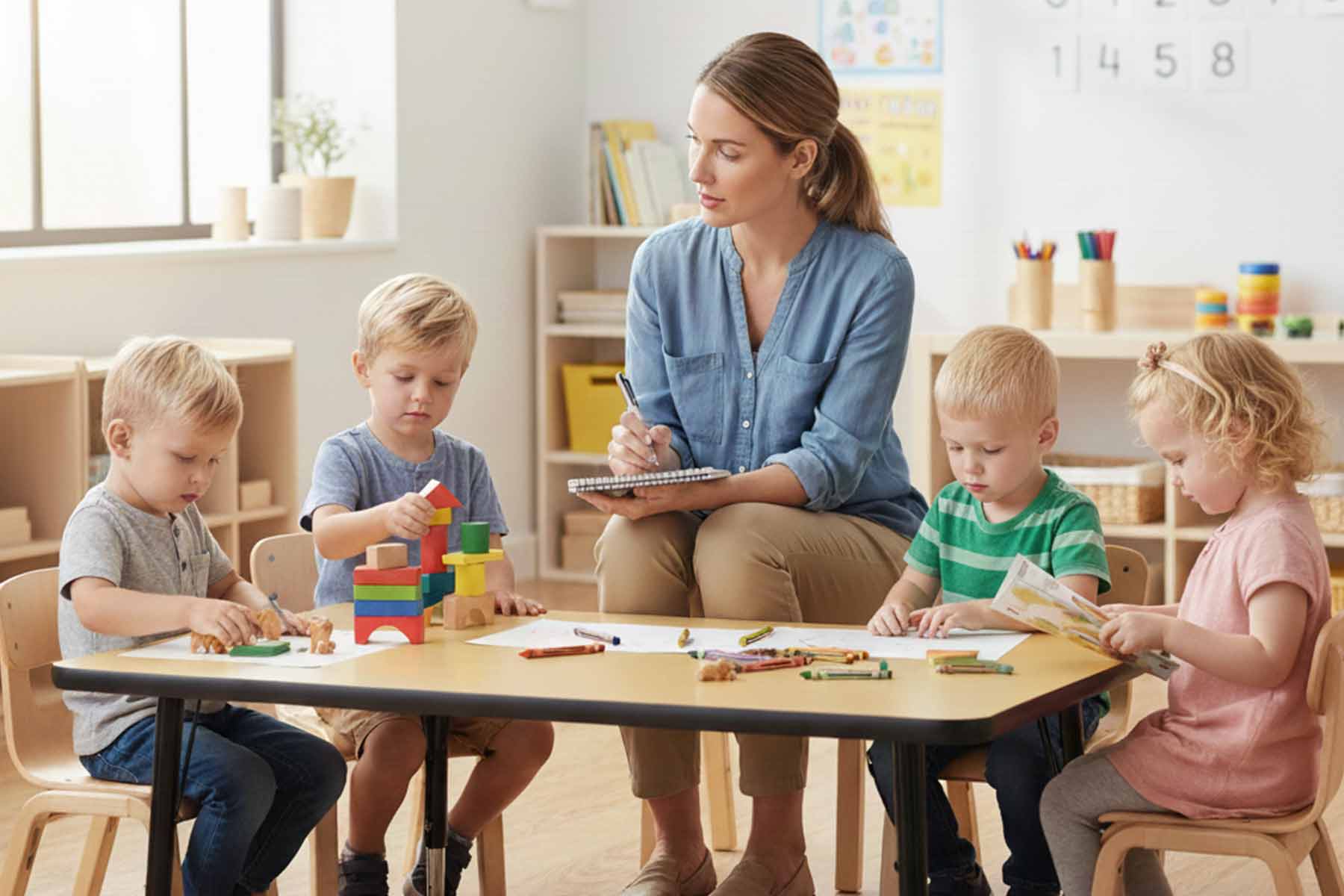
An anecdotal record is a brief written snapshot of a specific moment in a child's day. It captures what a child says or does in a factual, objective way, including the context of who was involved, what took place, where it happened, and how the child responded.
Anecdotal records are typically written in the past tense after the event occurs, though you'll want to jot them down as soon as possible while the details are still fresh. The goal is to create a concrete description that anyone reading could visualize clearly.
How anecdotal records differ from other observation methods
Anecdotal records differ slightly from other documentation approaches:
Anecdotal records vs. running records
Running records provide detailed, continuous documentation of everything a child does during a specific time period. They're written in the present tense as events unfold and capture every action, word, and behavior.
Anecdotal records, on the other hand, focus on specific significant moments rather than continuous behavior. They're shorter, less detailed, and completed after the observation.
Anecdotal records vs. general notes
While both involve writing things down, anecdotal records are more structured and purposeful than general notes. They require specific elements like date, time, setting, and objective descriptions. General notes can be informal, subjective, or incomplete.
The biggest difference is that anecdotal records serve a clear assessment purpose. They're meant to track development, inform teaching decisions, and provide concrete evidence of learning, not just remind you of something that happened.
Why anecdotal records matter in early childhood education
Anecdotal records are one of the most valuable tools for understanding and supporting each child's unique journey.
Track developmental milestones and progress
Every child develops at their own pace. Anecdotal records let you document those important milestones as they happen—whether it's a child's first attempt at writing their name, a breakthrough in social interaction, or mastery of a new physical skill.
Over time, these snapshots create a complete picture of how each child is growing across different developmental domains: physical, cognitive, language, and social-emotional skills.
Identify patterns and individual needs
One observation tells you something. Multiple observations tell you much more. When you review anecdotal records over weeks and months, patterns emerge that might otherwise go unnoticed.
You might discover that a child consistently struggles during transition times, excels at problem-solving activities, or shows particular interest in certain topics. These insights help you tailor your approach to each child's strengths and challenges.
Inform curriculum planning and teaching strategies
The most effective teaching happens when you understand what children can already do and what they're ready to learn next. Anecdotal records give you that understanding based on real evidence, not guesswork.
Instead of planning generic activities, you can design experiences that build on children's current abilities and interests. This personalized approach leads to more engaged learners and better outcomes.
Strengthen partnerships with families
Parents want to know how their child is doing, but "fine" or "good day" doesn't tell them much. Anecdotal records give you concrete, specific examples to share during conferences or in daily communication.
When you can say, "Today Maya helped another child who was upset by sharing her toy and saying 'It's okay, you can play with me,'" you're building trust and giving families a real window into their child's experience.
Support early identification of developmental concerns
Sometimes anecdotal records reveal potential developmental delays or challenges that need attention. By documenting specific behaviors and interactions, you create evidence that can help families and specialists determine if additional support would benefit a child.
How to write effective anecdotal records
Good anecdotal records strike a balance between being thorough and being manageable. Follow these tips to make yours clear, useful, and objective:
Include the essential elements
Every anecdotal record should contain these important pieces of information:
Date and time: When did this happen?
Child's name: Who are you observing?
Setting or location: Where did this take place?
Developmental domain or curriculum area: What area of learning does this relate to?
Objective description: What exactly happened?
These elements provide context and make your observations more meaningful when you review them later.
Write objectively and specifically
The most important rule for anecdotal records is to describe what you actually see and hear, not what you think or assume. Stick to the facts. Use specific, descriptive language that paints a clear picture. Include direct quotes when possible, and note facial expressions, gestures, and tone of voice. These details matter.
Don't do this: "Sarah was frustrated with the puzzle."
Do this: Describe the observable behavior: "Sarah tried to fit a puzzle piece into several different spots. She frowned, pushed the puzzle away, and said, 'This is too hard.'"
Focus on what children CAN do
The language you use shapes how you think about children's abilities. Statements that begin with "can't" or "doesn't" promote a deficit mindset and don't help with planning.
Don't do this: "Logan doesn't identify all his letters"
Do this: "Logan identifies the uppercase letters A, B, G, N, L, T, Z"
The second statement tells you exactly what Logan knows and gives you a clear starting point for instruction. Always ground your observations in children's strengths.
Write promptly while details are fresh
The longer you wait to write an anecdotal record, the more details you'll forget and the more your interpretation will creep in. Record your observations as soon as possible after the event.
Many educators keep sticky notes or a small notebook handy to jot down quick notes during the day, then expand them into anecdotal records during planning time or breaks.
Avoid common pitfalls
Watch out for these mistakes that can undermine the value of your anecdotal records:
Making assumptions about feelings or motivations
Using judgmental language
Summarizing behavior instead of describing it
Including too much irrelevant detail
Waiting too long to document what you observed
Using anecdotal records to assess development
Once you've collected anecdotal records, it's time to put them to work. Here's how to use these observations for meaningful assessment:
Look for patterns across multiple records
A single observation provides a glimpse. Multiple observations reveal the full picture. Review several anecdotal records for each child to identify recurring behaviors, skills, or challenges. These patterns tell you where children are thriving and where they might need additional support.
Connect observations to developmental milestones
Compare what you're seeing in your anecdotal records to typical developmental progressions for children's ages. This helps you recognize when children are meeting, exceeding, or lagging behind expected milestones.
Remember that children develop at different rates and that's normal. Your observations help you understand each child's individual trajectory rather than just checking boxes.
Design targeted interventions and support
When anecdotal records reveal a challenge or gap, you can create specific strategies to help. Maybe a child needs more practice with fine motor skills, would benefit from social stories about sharing, or requires extra support during transitions.
Monitor changes and improvements over time
Keep reviewing those records to see how children respond to your teaching strategies and interventions. Are you seeing progress? Do you need to try a different approach? This ongoing assessment cycle is at the heart of effective early childhood education.
Real examples of anecdotal records
Social-emotional development
Date/Time: October 15, 2025, 10:30 AM
Child: Jamie
Setting: Dramatic play area
Domain: Social-emotional
Jamie picked up the doctor kit and walked over to Sam, who was sitting on the floor holding his knee. Jamie asked, "Does it hurt?" Sam nodded. Jamie said, "I can fix it," and pretended to wrap a bandage around Sam's leg. Sam stopped crying and stood up.
Cognitive development
Date/Time: October 18, 2025, 2:15 PM
Child: Mia
Setting: Math center
Domain: Cognitive
During the counting game, Mia lined up 10 bears. She pointed to each one as she counted aloud, "One, two, three..." touching each bear in sync with the number. When she reached ten, she looked up and said, "There are ten bears!"
Language development
Date/Time: October 22, 2025, 9:00 AM
Child: Sofia
Setting: Morning meeting circle
Domain: Language
During morning meeting, Sofia raised her hand to share about her weekend. She said, "I went to my grandma's house and we baked cookies. They were chocolate chip cookies. We had to wait for them to cool down because they were too hot. Then we ate three cookies each!" She made eye contact with peers while speaking and used her hands to show the number three.
Physical development
Date/Time: October 25, 2025, 10:45 AM
Child: Tyler
Setting: Outdoor playground
Domain: Physical (gross motor)
Tyler approached the climbing wall. He reached up with his right hand to grab the first handhold, then lifted his left foot to the lowest foothold. He pulled himself up, alternating hands and feet as he climbed. When he reached the top, he smiled and called out, "I did it!" He descended using the same alternating pattern, moving slowly and deliberately.
Practical tips for organizing anecdotal records
Having a system for organizing your observations makes them much more useful and manageable. Follow these strategies:
Choose your format
You have several options for how to organize and store anecdotal records:
Digital platforms: Child care management software offers built-in tools for recording and organizing observations.
Index cards: Keep a card for each child in a file box. You can flip through them quickly and take them outdoors easily.
Notebooks or binders: Some educators prefer individual notebooks for each child or divided binders with sections for different children.
Folders and files: Create individual folders for each child. This works well if you print records or want to combine different types of documentation.
Review and reflect regularly
Anecdotal records become most valuable when you review them regularly to identify patterns and guide your teaching decisions. Set aside time weekly or monthly to look back through your observations.
Using our proprietary cost database, in-depth research, and collaboration with industry experts, we deliver accurate, up-to-date pricing and insights you can trust, every time.