![Preschool Curriculum: A Complete Guide [PRO]](https://res.cloudinary.com/liaison-inc/image/upload/f_auto/q_auto:eco,w_1200:eco,w_1200/v1759828777/content/trustedcare/trustedcare-preschool-curriculum-teacher-guiding-children-in-interactive-learning-activity.jpg)
Preschool Curriculum: A Complete Guide [PRO]
Preschool Curriculum: A Complete Guide [PRO]

Preschool curriculum
A thoughtfully designed preschool curriculum provides structure while inspiring curiosity, building confidence, and laying the foundation for lifelong learning. The most effective programs balance developmentally appropriate activities with flexibility to support each child’s unique needs and learning pace.
Whether you’re a center director choosing a program or a teacher refining your approach, understanding what makes a quality preschool curriculum helps you create meaningful learning experiences.
This guide explains the core elements of effective preschool curricula, from teaching philosophies and developmental readiness to practical strategies that nurture both children’s growth and teacher success.
What is a preschool curriculum?
A preschool curriculum is a structured plan that outlines what children learn, how they learn it, and how teachers guide their development in all areas. It includes daily routines, learning goals, assessment methods, and teaching strategies that work together to create meaningful early learning experiences.
An effective preschool curriculum:
Follows a clear educational philosophy while adapting to children’s interests and developmental stages
Provides a predictable routine that helps children feel safe but also allows time for exploration, play, and discovery
This balance gives children the freedom to learn at their own pace within a supportive environment.
A strong curriculum also extends beyond the classroom. It includes ways to engage families and support teachers through training and professional development. This well-rounded approach keeps learning consistent and builds lasting partnerships between educators and families.
Approaches to early childhood curriculum
Different teaching philosophies shape how children learn and how teachers guide them. Each approach offers a unique framework for planning activities, setting goals, and defining the teacher’s role. Explore these options to help you choose or design a curriculum that reflects your program’s values and community.
Play-based learning
Play-based programs recognize that children learn best through joyful exploration. Teachers create rich, engaging environments with open-ended materials and guide learning by observing and extending children’s play. This approach, supported by research, builds problem-solving, social skills, and brain development through hands-on discovery.
Montessori method
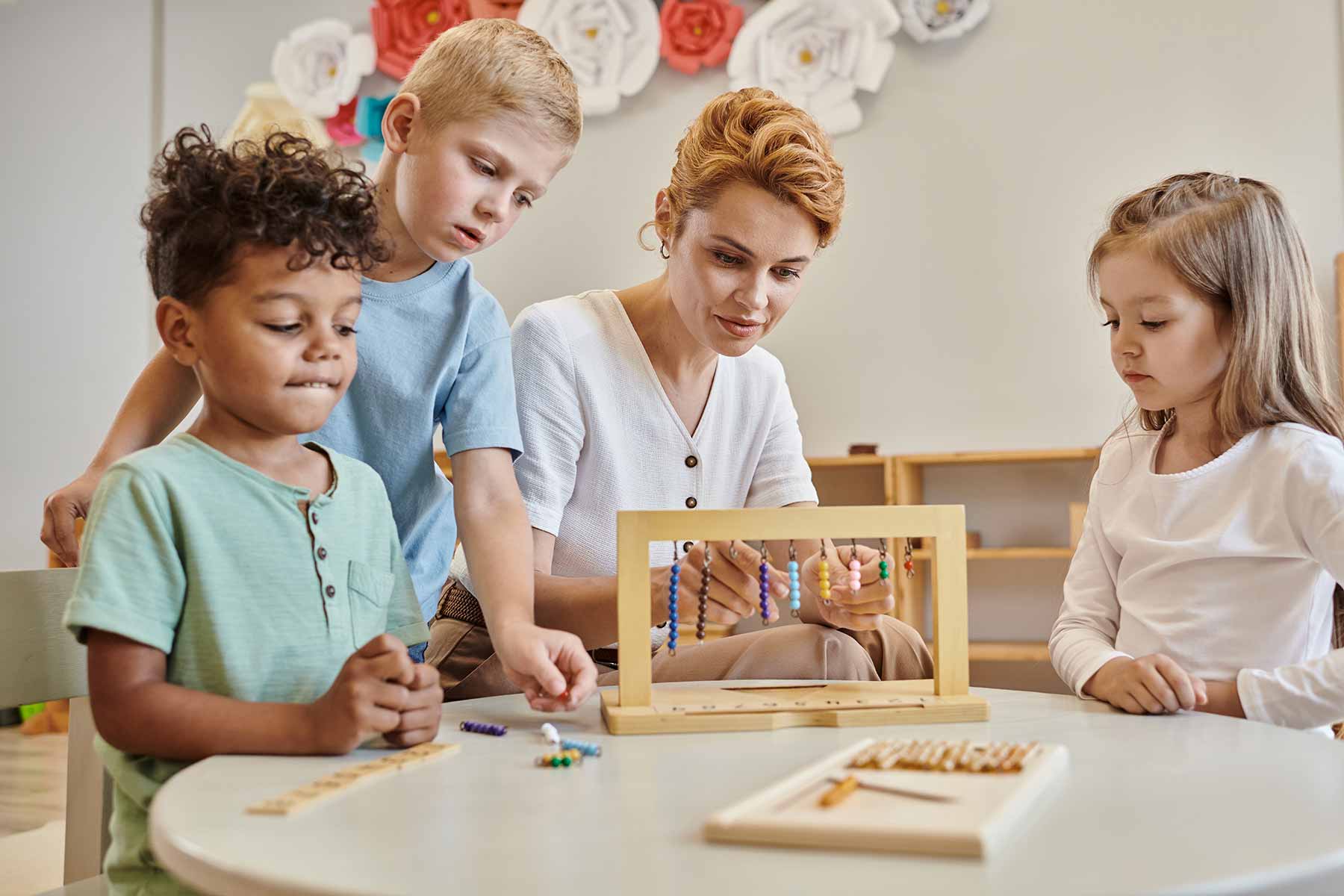
In Montessori classrooms, children choose from carefully designed materials that teach specific concepts. Teachers act as gentle guides, encouraging independence and focus. Mixed-age groups allow children to learn from one another, while long, uninterrupted work times help them develop concentration and confidence.
Reggio Emilia approach
This philosophy views children as curious researchers who build knowledge through collaborative projects. Teachers document children’s thinking and use their questions to shape lessons. Natural materials, creative expression, and strong family involvement are central, emphasizing learning as a community effort.
Academic-focused curriculum
Academic-based programs use more structured teaching to build early literacy and math skills. Lessons are organized with specific goals and measurable outcomes, helping prepare children for kindergarten. Teachers provide direct instruction in letters, numbers, and early reading while still including playful elements to keep learning engaging.
Waldorf education
Waldorf classrooms feel warm and home-like, focusing on rhythm, creativity, and imagination. Children learn through storytelling, art, and hands-on activities like cooking or gardening. Formal academics are introduced gradually, allowing children to develop social and emotional readiness before focusing on structured learning.
Components of an effective preschool curriculum
Besides a philosophical approach, a quality preschool curriculum includes several other elements to make learning meaningful and well rounded.
Clear learning objectives
A strong curriculum clearly outlines what children should know and be able to do. These goals align with state learning standards and cover all areas of early childhood development, including social, emotional, cognitive, and physical. At the same time, they remain flexible to support each child’s unique pace and abilities. Clear objectives help teachers plan purposeful activities and track progress over time.
Assessment strategies
Effective preschool programs use several ways to assess children’s growth naturally during play and daily routines.
Observations allow teachers to see how children apply skills in real situations.
Portfolios showcase work samples that reflect progress over time.
Developmental checklists help track milestones and identify where extra support might be needed.
The Creative Curriculum for preschool and similar programs integrate assessment seamlessly into daily teaching rather than treating it as a separate activity.
Family engagement
Families are a child’s first and most important teachers. Quality programs build strong home-school connections through regular updates, conferences, and hands-on opportunities for family involvement.
Information sessions help families understand the program’s goals and methods.
Conferences create space for shared goal setting that respects family values.
This collaboration builds trust and consistency between home and school.
Materials and resources
A quality curriculum for early childhood includes engaging materials that support learning in every area.
Open-ended materials like blocks, art supplies, and pretend play props encourage creativity.
Books strengthen language and literacy skills.
Manipulatives make math and science hands-on and fun.
Resource lists and budgeting tools help teachers stay organized and maintain well-equipped classrooms year-round.
Diversity and adaptation
An inclusive curriculum supports all learners, including those with different abilities, interests, and backgrounds. Using Universal Design for Learning (UDL) principles helps teachers plan activities that work for everyone from the start.
Supporting children with special needs includes:
Visual supports for children with communication challenges
Sensory modifications for children with processing differences
Individual adaptations that honor each child's unique strengths
Collaboration with specialists to ensure inclusion
Cultural responsiveness involves:
Incorporating diverse literature that reflects children's backgrounds
Celebrating various traditions with authentic respect
Recognizing different family values around independence and interaction
Reflecting enrolled families' cultures while introducing broader experiences
The curriculum should honor the diversity of your program while creating welcoming, inclusive environments for all children and families.
The role of developmentally appropriate practice
A preschool curriculum works best when it matches children’s developmental stages while offering challenges that help them grow without causing frustration.
The National Association for the Education of Young Children (NAEYC) defines developmentally appropriate practice as using what we know about child development and about each individual child to guide teaching decisions. This approach blends research with an understanding of children’s unique needs, ensuring that learning is both meaningful and achievable.
According to NAEYC, developmentally appropriate practice involves three key considerations:
Commonality: Understanding general patterns of development that most children share at a certain age
Individuality: Recognizing each child’s unique strengths, interests, experiences, and family background
Context: Considering the social and cultural influences that shape a child’s growth and learning
When teachers plan with these three areas in mind, they can create experiences that challenge children just enough to promote growth while honoring who they are and where they come from.
This framework helps educators design curriculum that supports every child’s progress while fostering confidence, curiosity, and a love of learning.
Developmental readiness
Preschool age can be anywhere from three to five years old, and each year brings a different stage of development that requires a slightly different approach.
Three-year-olds typically engage in parallel play, enjoy simple sorting activities, and are developing basic self-help skills like washing hands and putting on coats. Curriculum for this age emphasizes sensory exploration, beginning social skills, and large motor development through active play.
Four-year-olds are ready for more group play and can follow multi-step directions. They’re curious problem-solvers who enjoy longer projects and early literacy activities. Teachers can introduce counting, letter recognition, and hands-on science while encouraging cooperation and creativity.
Five-year-olds are often eager for more structure but still learn best through play. They can stay focused for longer periods, show interest in reading and writing, and demonstrate growing self-control. A curriculum for this age should prepare them for kindergarten by blending playful learning with early academic experiences.
How to plan your preschool curriculum
Designing or selecting a preschool curriculum requires careful planning. It should reflect your program’s philosophy, meet children’s developmental needs, and be realistic to implement. Follow these essential steps:
1. Identify your educational philosophy
Will your approach be child-led through play, teacher-directed with academic focus, or a blend of both? This foundational decision shapes every other aspect of your curriculum development. Consider your program's mission, family expectations, and community context as you make this choice.
2. Research state early learning standards
Your state's early learning standards define the developmental milestones and skills children should achieve at specific ages.
These standards provide a framework for curriculum planning while ensuring your program meets regulatory requirements. Many curriculum programs explicitly align with these standards, making documentation and accountability more straightforward.
3. Define specific learning objectives
Establish clear goals that encompass all developmental domains for each age group you serve:
What cognitive concepts will you introduce?
Which social-emotional skills will you emphasize?
How will you support language development and physical growth?
Clear objectives help you select appropriate activities, organize your classroom environment, and assess children's progress effectively.
4. Map out daily and weekly schedules
Balance structured activities with free play, individual work with group experiences, and active play with quiet time. Young children thrive on predictable routines, but preschool schedules should remain flexible enough to follow children's interests and accommodate teachable moments.
5. Select developmentally appropriate activities
Choose activities that address your learning objectives while engaging children's natural curiosity. Consider how each activity supports development across multiple domains simultaneously. Build in opportunities for both teacher-guided instruction and child-initiated exploration.
6. Establish review and adjustment systems
Plan regular check-in points to evaluate what's working well and what needs modification. Successful curriculum evolves based on ongoing observation of how children engage with activities and demonstrate learning.
Implementing your preschool curriculum
Turning your curriculum plan into effective daily practice takes thoughtful preparation and teamwork. Success depends on well-trained staff, organized environments, and ongoing reflection.
Staff training and professional development
Teachers need comprehensive training that goes beyond initial orientation. Professional development should cover child development principles, curriculum components, activity adaptations, and observation techniques. Hands-on practice opportunities help teachers feel confident implementing new approaches before using them with children.
Ongoing learning opportunities support continuous improvement.
Regular team meetings create space for collaborative planning and problem-solving.
Mentoring systems pair experienced teachers with newer staff members to share strategies and provide guidance.
Access to workshops, conferences, and professional learning communities strengthens teaching skills over time.
Classroom environment setup
The physical environment plays a huge role in how well the curriculum works. Arrange the classroom into clear learning areas—such as dramatic play, art, building, literacy, and science—to support different types of learning.
Keep materials at child level, labeled with words and pictures for independence.
Rotate toys and activities regularly to keep children engaged without overwhelming them.
Display children’s work at their eye level to build pride and ownership.
Include quite spaces for individual work.
A well-organized, inviting classroom helps children feel secure and ready to explore.
Daily schedule implementation
Consistent routines help young children feel safe and confident. Balance teacher-led group times with free play, indoor and outdoor activities, and quiet moments for rest or reflection. Build flexibility into schedules to accommodate children's emerging interests or extend engaging activities.
Plan transitions carefully, using songs, visual cues, and gentle reminders to help children move smoothly between activities. Allow enough time for cleanup and preparation to reduce stress for both children and teachers.
Evaluating curriculum effectiveness
Evaluate regularly to help identify what's working well and where adjustments are needed. Essential evaluation practices include:
Collect data from observations, assessments, teacher reflections, and family feedback.
Review both measurable outcomes (like developmental milestones) and qualitative ones (like engagement or creativity).
Schedule yearly reviews to update activities and incorporate new research.
Include teachers, administrators, and families in the review process so the curriculum continues to reflect your community’s needs. Encourage staff to share ideas through professional learning groups or peer observations.
Tracking progress and documenting successes helps you celebrate growth, make informed improvements, and ensure your curriculum truly supports both children and teachers.
Using our proprietary cost database, in-depth research, and collaboration with industry experts, we deliver accurate, up-to-date pricing and insights you can trust, every time.