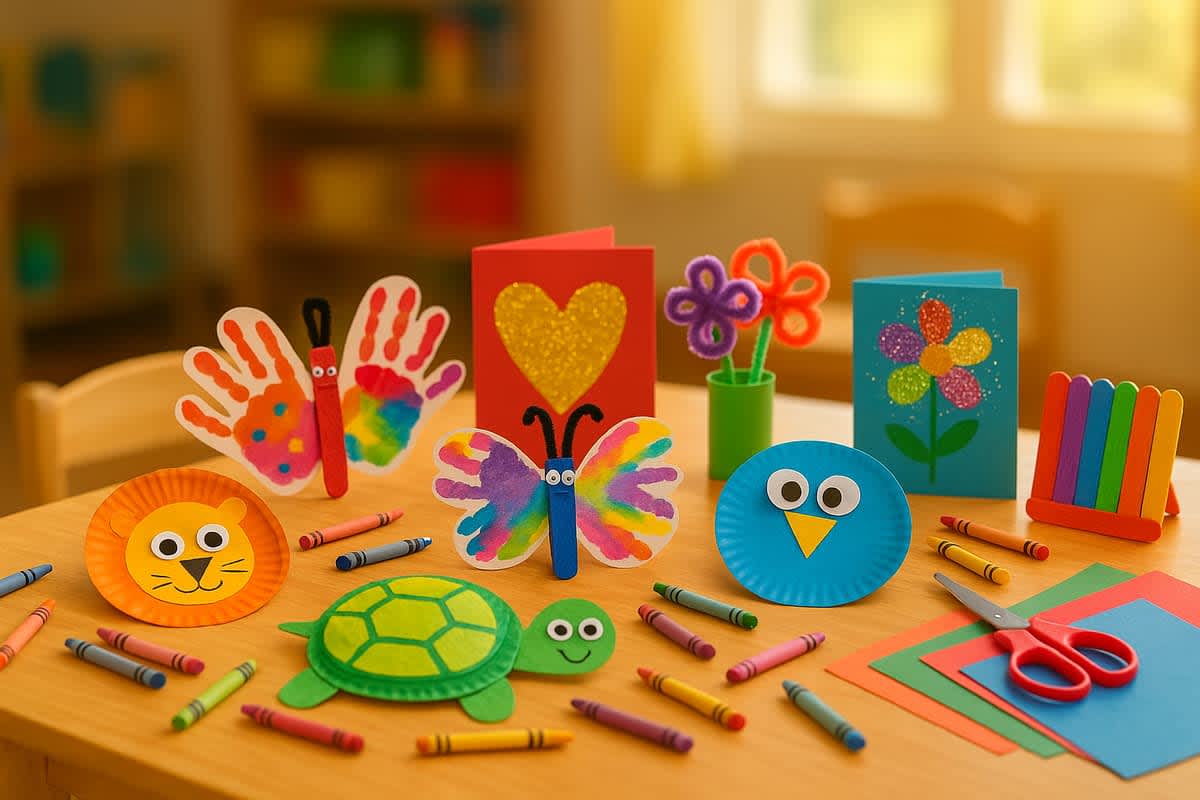
Easy and fun preschool crafts for little hands
Easy and fun preschool crafts for little hands
$0.50 – $3 per project (paper crafts)
$1 – $5 per project (painting & stamping)
$2 – $6 per project (sensory & playdough)

Easy and Fun Preschool Crafts for Little Hands
Preschool crafts are one of the best ways to keep children ages 3 to 5 engaged, creative, and learning. Whether you're a parent looking for rainy-day activities, a teacher planning classroom projects, or a caregiver searching for screen-free fun, the right craft can build fine motor skills, spark imagination, and create lasting memories. From simple paper plate animals to seasonal masterpieces, preschool-age children thrive when given colorful materials and just enough guidance to let their creativity shine.
This guide covers dozens of preschool craft ideas organized by category, season, skill level, and material type so you can find exactly the right project for your little one.
| Craft Category | Best for Ages | Typical Supply Cost |
|---|---|---|
| Paper and construction paper crafts | 3 – 5 | $0.50 – $3 per project |
| Painting and stamping crafts | 2 – 5 | $1 – $5 per project |
| Recycled material crafts | 3 – 5 | $0 – $2 per project |
| Nature-based crafts | 3 – 5 | $0 – $3 per project |
| Sensory and playdough crafts | 2 – 5 | $2 – $6 per project |
| Seasonal and holiday crafts | 3 – 5 | $1 – $5 per project |
Why Preschool Crafts Matter for Child Development
Crafting is far more than a way to pass the time. For preschoolers, every cut, glue dab, and brushstroke supports critical areas of development. Research in early childhood education consistently shows that hands-on art activities strengthen the neural connections children need for academic success later on.
| Developmental Area | How Crafts Help |
|---|---|
| Fine motor skills | Cutting, gluing, threading, and painting build hand strength and dexterity needed for writing |
| Cognitive development | Following steps, making decisions about colors and shapes, and problem-solving all exercise critical thinking |
| Language skills | Describing their work, learning new vocabulary (texture, pattern, symmetry), and storytelling through art |
| Social-emotional growth | Sharing supplies, taking turns, expressing emotions, and building confidence through accomplishment |
| Creativity and imagination | Open-ended projects encourage children to think independently and experiment without fear of failure |
Process Art vs. Product Art
One important distinction in preschool crafting is the difference between process art and product art. Process art focuses on the experience of creating, with no specific end result in mind. Think finger painting, free-form collage, or exploring textures with playdough.
Product art, on the other hand, follows steps to achieve a specific result, such as making a paper plate ladybug or a handprint tree. Both approaches have value. Process art nurtures creativity and self-expression, while product art teaches children to follow directions and practice patience.
A healthy mix of both types keeps preschoolers engaged and developing well-rounded skills.
Essential Supplies for Preschool Crafts
Stocking a basic craft supply kit saves time and money. Most preschool projects rely on the same core materials, so keeping a well-organized supply bin means you're always ready for a spontaneous craft session. For a comprehensive overview of what to stock in a classroom, check out our preschool supply list.
| Supply | What to Buy | Estimated Cost |
|---|---|---|
| Construction paper (multi-color pack) | 200 to 500 sheet pack | $5 – $12 |
| Washable glue sticks | Pack of 12 to 30 | $4 – $10 |
| Liquid school glue | 4 oz to 8 oz bottles | $1 – $3 |
| Child-safe scissors | Blunt-tip, ergonomic grip | $2 – $6 |
| Washable paint (tempera or finger paint) | 6 to 12 color set | $6 – $15 |
| Paintbrushes | Variety pack with thick handles | $3 – $8 |
| Crayons | Jumbo crayons for small hands | $2 – $5 |
| Markers (washable) | Broad-tip, 10 to 20 colors | $3 – $8 |
| Paper plates | Plain white, 50 to 100 pack | $3 – $6 |
| Googly eyes | Assorted sizes, 100+ pack | $2 – $5 |
| Pipe cleaners (chenille stems) | 100 pack, multi-color | $3 – $6 |
| Pom-poms | Assorted sizes and colors | $3 – $6 |
| Cotton balls | Standard bag | $1 – $3 |
| Stickers | Variety packs (stars, animals, shapes) | $2 – $6 |
Before purchasing new materials, check your recycling bin. Cardboard tubes, egg cartons, bottle caps, old magazines, fabric scraps, and cereal boxes are all excellent free craft supplies. Teaching children to repurpose materials also introduces early concepts of sustainability.
Paper and Construction Paper Crafts
Paper crafts are the backbone of preschool art projects. They require minimal supplies, are easy to clean up, and can be adapted to nearly any theme or skill level. From simple tearing and gluing to more advanced cutting and folding, paper crafts grow with your child.
| Craft Idea | Skills Practiced | Difficulty Level |
|---|---|---|
| Paper chain caterpillar | Cutting, gluing, patterning | Easy |
| Construction paper mosaic | Tearing, gluing, color recognition | Easy |
| Paper bag puppets | Cutting, gluing, imaginative play | Easy to moderate |
| Accordion-fold butterfly | Folding, symmetry awareness | Moderate |
| Paper plate masks | Cutting, decorating, role play | Easy to moderate |
| Paper weaving | Fine motor control, pattern recognition | Moderate |
| 3D paper flowers | Cutting, curling, layering | Moderate |
Paper Chain Caterpillar
Cut strips of green, yellow, and red construction paper about 1 inch wide and 6 inches long. Show your child how to loop the first strip into a circle and glue it closed. Then thread the next strip through the circle before gluing it to form a chain. Add googly eyes and pipe cleaner antennae to the first loop to create the caterpillar's head.
This craft reinforces patterning skills if you alternate colors, and it's a wonderful way to practice the pincer grip needed for writing.
Construction Paper Mosaic
Draw a simple outline on a piece of white paper, such as a heart, star, or animal shape. Give your child small squares or torn pieces of colorful construction paper and a glue stick. Let them fill in the outline by gluing the pieces inside the shape.
Tearing paper is actually an excellent fine motor exercise for preschoolers because it requires bilateral coordination, using both hands in a controlled way.
Paper Bag Puppets
Brown paper lunch bags make perfect puppet bases. Provide construction paper, markers, googly eyes, yarn for hair, and fabric scraps. Let children create any character they imagine, from farm animals to superheroes. After crafting, put on a puppet show to extend the activity into storytelling and language development.
Painting and Stamping Crafts
Painting is often a preschooler's favorite art activity. The sensory experience of paint on fingers, the bold colors, and the freedom of brushstrokes all make painting deeply satisfying for young children. Stamping adds structure while still keeping the process fun and accessible.
| Craft Idea | Materials Needed | Difficulty Level |
|---|---|---|
| Handprint art (trees, animals, flowers) | Washable paint, paper | Easy |
| Sponge stamping | Cut sponges, paint, paper | Easy |
| Bubble wrap printing | Bubble wrap, paint, paper | Easy |
| Fork-painted flowers | Plastic fork, paint, paper | Easy |
| Cotton ball cloud painting | Cotton balls, clothespins, paint | Easy |
| Marble rolling art | Marbles, paint, shallow box, paper | Easy |
| Watercolor resist art | White crayon, watercolors, paper | Moderate |
| Spin art | Salad spinner, paint, paper | Easy |
Handprint Art
Handprint crafts are a preschool staple for good reason. They're easy, personal, and make wonderful keepsakes. Paint your child's hand and press it onto paper to create a handprint tree (brown trunk with green handprint leaves), a peacock (colorful handprint tail feathers), or a bouquet of flowers.
Layer multiple handprints in autumn colors for a fall tree, or use a single handprint as a butterfly wing. These projects also introduce children to color mixing when palms and fingers are painted in different shades.
Fork-Painted Flowers
Dip a plastic fork into tempera paint and press it onto paper to create the petals of a flower. The tines of the fork create a beautiful texture that looks like layered petals. Use different colors for each flower and add green painted stems and leaves with a brush.
This craft teaches children that art tools aren't limited to brushes, encouraging creative thinking about everyday objects.
Watercolor Resist Art
Have your child draw shapes, letters, or a picture using a white crayon on white paper. The drawing will be invisible at first. Then paint over the entire paper with watercolors. The crayon wax resists the paint, and the hidden drawing magically appears. This never fails to delight preschoolers and is a wonderful way to practice letter formation.
Recycled Material Crafts
Crafting with recycled materials teaches resourcefulness, creativity, and environmental awareness. These projects cost almost nothing and prove that the best craft supplies are often already in your home.
| Craft Idea | Recycled Material Used | Difficulty Level |
|---|---|---|
| Toilet paper roll animals | Cardboard tubes | Easy |
| Egg carton caterpillar | Egg cartons | Easy |
| Cereal box puzzle | Cereal boxes | Easy to moderate |
| Bottle cap magnets | Plastic bottle caps | Easy |
| Cardboard tube binoculars | Two paper towel tubes or toilet paper rolls | Easy |
| Newspaper collage | Old newspapers, magazines | Easy |
| Milk jug planters | Plastic milk jugs | Moderate (needs adult help cutting) |
Toilet Paper Roll Animals
Cardboard toilet paper rolls are one of the most versatile craft supplies for preschoolers. Paint a roll orange and add black stripes for a tiger. Paint it gray with big ears for an elephant. Add wings cut from construction paper for an owl. The cylindrical shape gives the finished animal a satisfying 3D quality that flat crafts don't have.
Start a collection of tubes so you always have them on hand. A single roll takes about 15 to 20 minutes to transform into a finished animal, which is the ideal attention span for most 3- to 5-year-olds.
Egg Carton Caterpillar
Cut a row of cups from a cardboard egg carton (usually 4 to 6 cups). Let your child paint each cup a different color. Once dry, add googly eyes to the first cup, pipe cleaner antennae, and a drawn smiley face. This simple project covers counting, color identification, and fine motor painting skills.
Nature-Based Crafts
Taking crafting outdoors, or bringing outdoor materials inside, connects preschoolers with the natural world. Collecting leaves, sticks, pinecones, and flowers turns a nature walk into a treasure hunt and makes the crafting experience richer. Nature crafts also pair well with science experiments for preschoolers to extend the learning.
| Craft Idea | Natural Materials | Difficulty Level |
|---|---|---|
| Leaf rubbing art | Leaves, crayons, paper | Easy |
| Stick frame | Sticks, twine, glue | Moderate |
| Pinecone bird feeder | Pinecones, peanut butter, birdseed | Easy |
| Flower petal collage | Petals, leaves, glue, paper | Easy |
| Rock painting | Smooth rocks, acrylic paint | Easy |
| Nature crown | Cardboard strip, leaves, flowers, tape | Easy to moderate |
| Pressed flower bookmark | Flowers, clear contact paper, cardstock | Moderate |
Leaf Rubbing Art
Place a leaf with prominent veins under a sheet of thin white paper. Show your child how to rub the side of a crayon gently over the paper. The leaf's shape and vein pattern will appear like magic. Use multiple leaves and colors to create an entire forest scene.
This is a wonderful activity for teaching about different leaf shapes, tree identification, and the changing seasons.
Pinecone Bird Feeder
Tie a piece of string or yarn around the top of a pinecone. Spread peanut butter (or sunflower seed butter for allergy-safe classrooms) over the outside of the pinecone, then roll it in birdseed. Hang it from a tree branch and watch birds visit. This craft combines science, nature observation, and fine motor work in one activity.
Rock Painting
Collect smooth, flat rocks from a park, garden, or craft store. Paint them with acrylic paint to create ladybugs, bumblebees, monsters, or abstract designs. Seal finished rocks with a coat of clear nail polish or Mod Podge to protect the paint. Painted rocks make lovely garden decorations or gifts for family members.
Nature crafts encourage observation skills. Before collecting materials, ask your child to describe what they see, feel, and smell. Questions like "Why do you think this leaf is red?" or "How does the bark feel?" build scientific thinking and vocabulary.
Sensory and Playdough Crafts
Sensory crafts engage multiple senses at once, making them especially valuable for preschool-age development. Playdough, slime, sensory bins, and textured art projects help children regulate their emotions, build hand strength, and explore cause and effect. Understanding the different types of play in child development can help you choose sensory activities that match your child's needs.
| Craft Idea | Sensory Focus | Difficulty Level |
|---|---|---|
| Homemade playdough | Touch, smell (add essential oils) | Easy (adult help for cooking) |
| Playdough creatures and shapes | Touch, fine motor strength | Easy |
| Sand art | Touch, visual | Easy |
| Puffy paint art | Touch, visual texture | Easy |
| Tissue paper stained glass | Visual, touch | Moderate |
| Shaving cream marbling | Touch, visual | Easy (messy) |
| Salt dough ornaments | Touch, smell | Moderate |
Homemade Playdough Recipe
Making playdough from scratch is a craft in itself. Combine 1 cup flour, 1/2 cup salt, 2 tablespoons cream of tartar, 1 cup water, and 1 tablespoon vegetable oil in a saucepan. Cook over medium heat, stirring constantly, until the mixture forms a ball. Remove from heat and knead until smooth. Add food coloring and a few drops of essential oil (lavender for calming, peppermint for energizing) for extra sensory appeal.
Homemade playdough costs pennies to make and lasts several weeks when stored in an airtight container.
Puffy Paint Art
Mix equal parts white glue, shaving cream, and a few drops of food coloring. The resulting paint has a thick, fluffy texture that dries with a raised, pillowy surface. Children love the unusual texture, and the finished art has a unique 3D quality. Apply it to cardstock for the best results, as thin paper may buckle.
Shaving Cream Marbling
Spread shaving cream in a flat tray. Drop dots of food coloring or liquid watercolors across the surface. Use a toothpick or craft stick to swirl the colors into a marble pattern. Press a sheet of paper onto the shaving cream, lift it off, and scrape away the excess cream with a ruler or old credit card. The marbled pattern left behind is beautiful and unique every time.
Seasonal and Holiday Preschool Crafts
Seasonal crafts help preschoolers understand the calendar year, connect to cultural traditions, and celebrate the world around them. Organizing crafts by season also keeps your activity rotation fresh and exciting.
| Season/Holiday | Craft Ideas | Key Materials |
|---|---|---|
| Fall | Leaf prints, apple stamping, scarecrow puppets, pumpkin decorating | Leaves, apples, paint, paper bags |
| Winter | Snowflake cutting, cotton ball snowman, paper plate penguin, mitten lacing cards | White paper, cotton balls, yarn |
| Spring | Butterfly crafts, flower gardens, rain stick, caterpillar to butterfly sequence | Coffee filters, watercolors, paper tubes |
| Summer | Paper plate sun, ocean scene, ice cream cone craft, sand castles | Paper plates, tissue paper, sand |
| Valentine's Day | Heart stamps, love bug, handprint cards | Heart-shaped sponges, paint, paper |
| Halloween | Paper plate spider, ghost handprints, bat craft | Black paper, white paint, googly eyes |
| Thanksgiving | Handprint turkey, thankful tree, corn craft | Brown paper, paint, bubble wrap |
| Christmas/Hanukkah | Ornaments, wreath, menorah craft, paper snowflakes | Salt dough, green paper, glitter |
Fall Crafts
Apple stamping is a fall favorite. Cut an apple in half, dip the flat side into red or green paint, and stamp it onto paper. The natural shape of the apple creates a beautiful print, and you can add a painted brown stem and green leaf. This works perfectly alongside a lesson about apple orchards, fall harvest, or the letter "A."
For pumpkin decorating, use small real pumpkins or cut pumpkin shapes from orange paper. Let children paint, glue, and stick on whatever they like. Foam stickers, sequins, and markers all work well.
Winter Crafts
Coffee filter snowflakes are a classic winter project. Fold a round coffee filter into quarters, then let your child cut small shapes along the edges with child-safe scissors. Unfold to reveal a unique snowflake. This craft practices folding and cutting precision while teaching symmetry.
Cotton ball snowmen are equally simple. Draw or cut out three circles in descending size from white paper. Glue cotton balls all over them for a fluffy texture, then add a construction paper hat, scarf, and button eyes.
Spring Crafts
Coffee filter butterflies are a spring staple. Flatten a coffee filter and let your child color it with washable markers. Spray lightly with water to make the colors bleed and blend. Once dry, pinch the center and secure with a clothespin, which becomes the butterfly's body. Add pipe cleaner antennae and googly eyes to the clothespin.
This project beautifully demonstrates color mixing and is endlessly fascinating for preschoolers who watch the colors transform as the water spreads.
Crafts Organized by Learning Objective
If you're a teacher or homeschooling parent, it helps to choose crafts that align with specific learning goals. Incorporating crafts into a broader preschool curriculum ensures that creative activities support developmental benchmarks. The following reference table makes it easy to match crafts to educational objectives.
| Learning Objective | Recommended Crafts |
|---|---|
| Letter recognition | Alphabet collages, letter stamping, letter-shaped playdough |
| Number and counting | Number caterpillar, counting collage, numbered handprints |
| Color recognition | Color sorting collages, rainbow crafts, color mixing experiments |
| Shapes | Shape robots (glue geometric shapes to form a robot), shape collage, shape stamping |
| Scissor skills | Cutting strips, fringe cutting, snowflake cutting, paper weaving |
| Following directions | Step-by-step product crafts like paper plate animals or origami-style folds |
| Self-expression | Free painting, open-ended collage, self-portrait |
Alphabet Collages
Choose a letter of the week. Cut that letter from a large piece of construction paper. Have your child find and glue pictures from old magazines that start with that letter sound. For the letter "B," they might glue pictures of a ball, banana, and butterfly. This connects phonics instruction to a hands-on art experience.
Shape Robots
Pre-cut a variety of geometric shapes from different colors of construction paper: circles, squares, rectangles, triangles, and ovals. Let your child arrange and glue the shapes onto a piece of paper to build a robot. Ask them to identify each shape as they use it. This reinforces shape vocabulary while encouraging spatial awareness and creativity.
Tips for Successful Crafting with Preschoolers
Even the best craft idea can fall flat without the right approach. Preschoolers are naturally enthusiastic but also easily frustrated, so a little preparation goes a long way.
| Tip | Why It Matters |
|---|---|
| Prep materials in advance | Preschoolers lose interest quickly; having everything ready keeps momentum going |
| Protect surfaces and clothing | A plastic tablecloth and old t-shirt prevent stress about mess |
| Demonstrate first, then step back | Show each step once, then let them try independently |
| Embrace imperfection | A lopsided butterfly is a sign of creative independence, not failure |
| Keep sessions short (15 to 25 minutes) | Aligns with typical preschool attention spans |
| Offer choices | "Do you want red or blue?" empowers children and reduces resistance |
| Display finished work | Hanging art on the fridge or a gallery wall builds pride and motivation |
Managing Mess
Mess is inevitable with preschool crafts, and that's perfectly fine. Lay down newspaper, a shower curtain, or a plastic tablecloth before starting. Keep wet wipes nearby for quick hand cleaning. Use washable versions of paint, markers, and glue whenever possible.
Consider setting up a dedicated craft space if you have room. A small table in a kitchen corner or a covered section of the garage allows children to create freely without worrying about staining furniture or carpet.
Adapting Crafts for Different Ages and Abilities
Not all preschoolers are at the same developmental stage. A newly turned 3-year-old will need simpler tasks (tearing paper, stamping, sticker placement), while a 5-year-old approaching kindergarten may be ready for cutting along lines, writing their name on their art, and following multi-step directions. Understanding the typical preschool age range can help you set appropriate expectations.
When crafting in a mixed-age group, prepare the same base project but adjust expectations. Younger children might glue pre-cut shapes while older children cut their own. Both end up with a finished product they're proud of.
Always supervise preschoolers during craft time. Avoid small items that pose choking hazards for children who still put objects in their mouths. Use child-safe scissors with blunt tips. Check that all paints, glues, and markers are labeled non-toxic. If using food items like dried pasta or beans, watch for allergies.
Craft Kits vs. DIY Projects
Pre-packaged craft kits offer convenience, but DIY projects from basic supplies tend to be more affordable and more creatively open-ended. Here's how they compare.
| Factor | Craft Kits | DIY Projects |
|---|---|---|
| Cost per project | $5 – $15 | $0.50 – $5 |
| Convenience | Everything included, no prep | Requires gathering supplies and planning |
| Creative freedom | Limited; follows kit instructions | Unlimited; child drives the process |
| Reusability | One-time use | Supplies can be used for many projects |
| Best for | Travel, gifts, quick activities | Daily crafting, classroom use, budget-friendly homes |
Craft kits are excellent for travel, playdates, or when you need a quick activity without preparation. However, building a basic supply stash and using DIY project ideas gives you far more versatility and saves money over time. A $10 pack of construction paper and a $3 bottle of glue can fuel dozens of projects.
Frequently Asked Questions
What age is appropriate for preschool crafts?
Most preschool crafts are designed for children ages 3 to 5. Simpler activities like finger painting, sticker art, and tearing paper can work for children as young as 2 with close supervision. More complex projects involving scissors, multi-step directions, and small parts are better suited for ages 4 and up.
How long should a preschool craft session last?
Plan for 15 to 25 minutes per project. Some children will finish in 10 minutes, while others may stay engaged for 30 minutes or more. Follow your child's lead. If they're losing interest, it's fine to stop. If they want to keep going, let them explore