
Daycare Room Setup Ideas
Daycare Room Setup Ideas

Why thoughtful daycare room design matters
The best daycare room setup ideas balance functionality with warmth, safety with stimulation, and structure with flexibility. Your space should invite exploration while supporting daily routines, encourage independence while ensuring supervision, and feel both professional and homelike.
Your environment acts like a "silent teacher." A well-planned space:
Reduces behavior challenges by lowering confusion and overstimulation
Supports smoother transitions with clear routines and zones
Helps children feel confident and capable (materials are reachable and predictable)
Makes staff more effective (less chaos, more teaching and interaction)
Signals quality to families the moment they walk in
Essential elements every daycare space needs
These foundational elements belong in every quality childcare environment:
Clear sightlines allow teachers to supervise all children simultaneously. Arrange furniture so no area becomes a hidden corner. Low shelving works better than tall cabinets for dividing spaces while maintaining visibility.
Defined activity zones help children understand expectations and reduce overstimulation. Even in small spaces, you can create distinct areas for quiet play, active movement, messy art, and group gatherings using rugs, shelving, or simple floor tape.
Natural lighting supports healthy development and creates a welcoming atmosphere. When windows aren't available, choose warm-toned bulbs that mimic daylight rather than harsh fluorescent lighting.
Age-appropriate furniture scaled to children's size promotes independence and proper posture. Adult-sized chairs belong in feeding areas and teacher stations, but children need furniture they can use without assistance.
Daycare infant room ideas that support development
Infant spaces require special consideration since babies experience rapid developmental changes during their first year. Your room design should accommodate both tiny newborns and mobile almost-toddlers.
Create a dedicated sleep sanctuary
Position cribs away from high-traffic areas and active play zones. Follow your state's spacing requirements between cribs, typically at least three feet. Use soft lighting, sound machines playing white noise, and neutral wall colors to promote restful sleep. Avoid placing stimulating decorations directly above cribs.
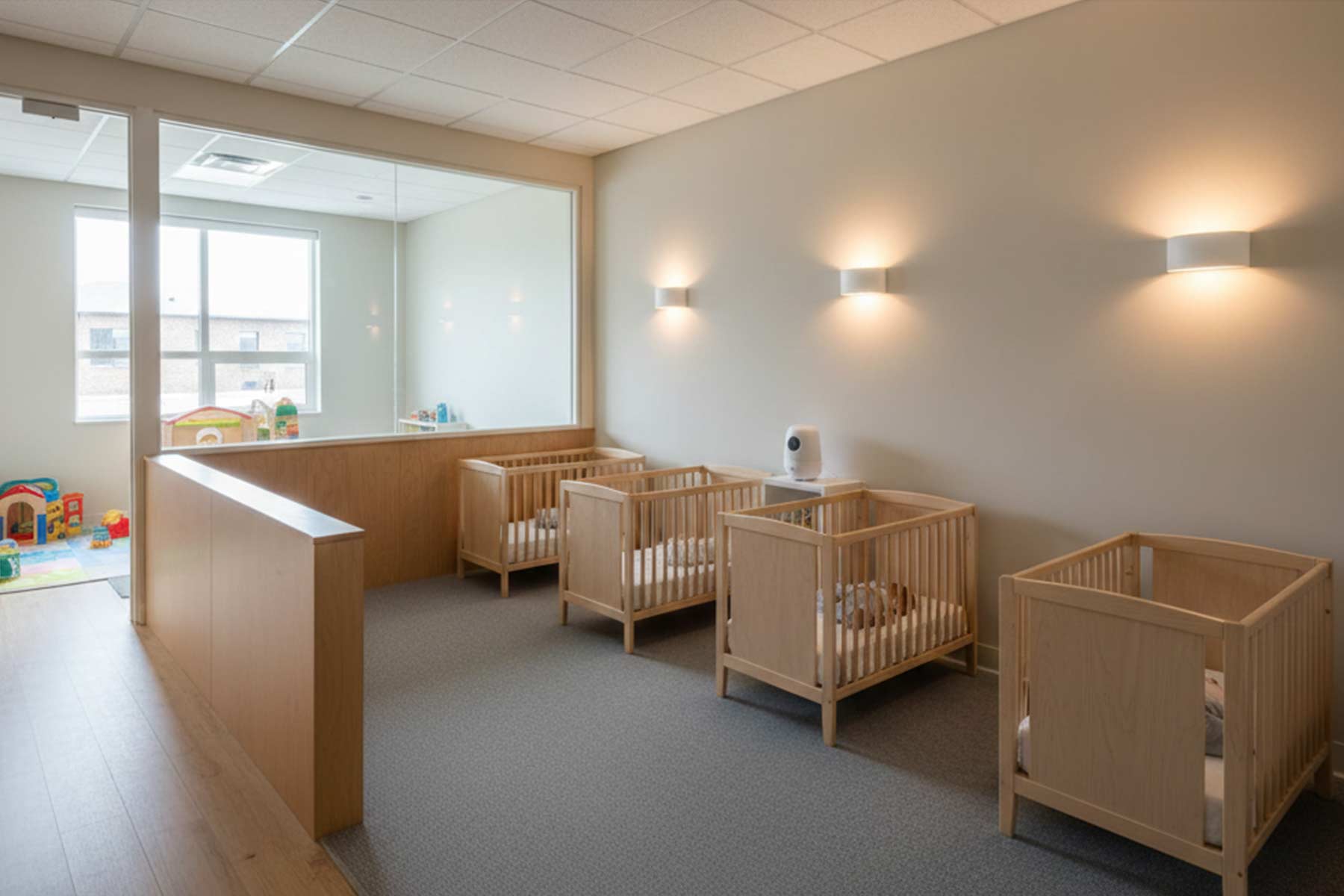
Design a comfortable feeding zone
Create a cozy feeding area with supportive seating for caregivers. A glider or cushioned chair with good back support makes bottle-feeding less taxing during long days. Position feeding areas near sinks for easy cleanup and handwashing. Store bottles, bibs, and burp cloths within arm's reach but out of play zones.
Establish a generous tummy time area
Use a large, cushioned mat with various textures. Surround this space with low mirrors, textured panels, and age-appropriate toys that encourage reaching and grasping. Keep this zone clear of furniture that babies could pull up on before they're developmentally ready.
Set up an efficient diapering station
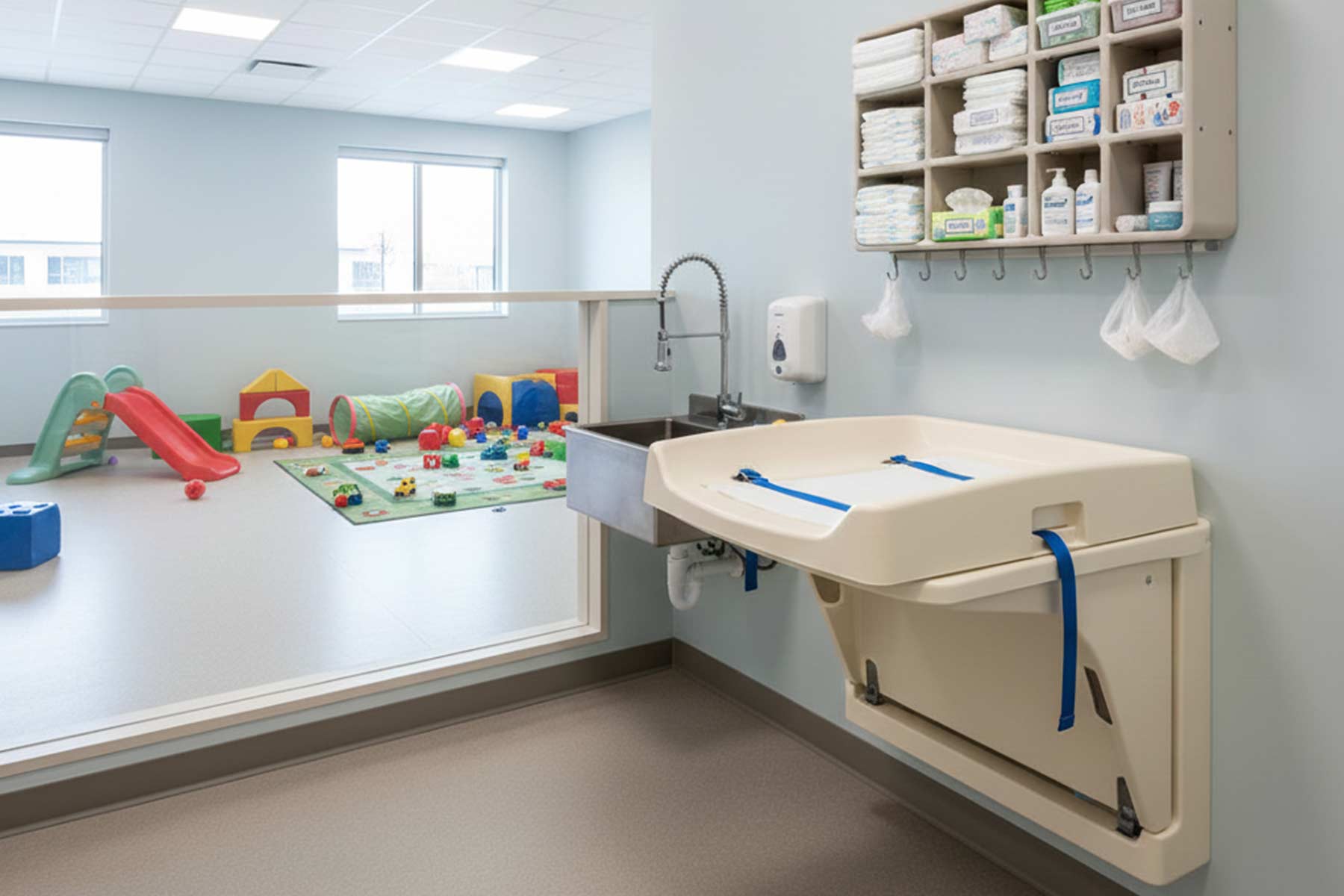
Positioned your diapering station so you never turn your back on other infants. Wall-mounted changing tables with safety straps work well. Install a sink nearby and store diapers, wipes, and ointments in organized caddies attached to the walls.
Choose calming colors and minimal patterns
Soft blues, gentle greens, warm beiges, and pale yellows create a soothing atmosphere for infant spaces. Save bright primary colors for toddler rooms where they support learning and energy. That said, include some high-contrast elements; black and white patterns support developing vision, especially during the first few months.
Toddler classroom setup ideas for active learners
Toddlers need rooms that channel their boundless energy while teaching them to make choices and follow routines. Your setup should balance structure with freedom.
Organize distinct learning centers
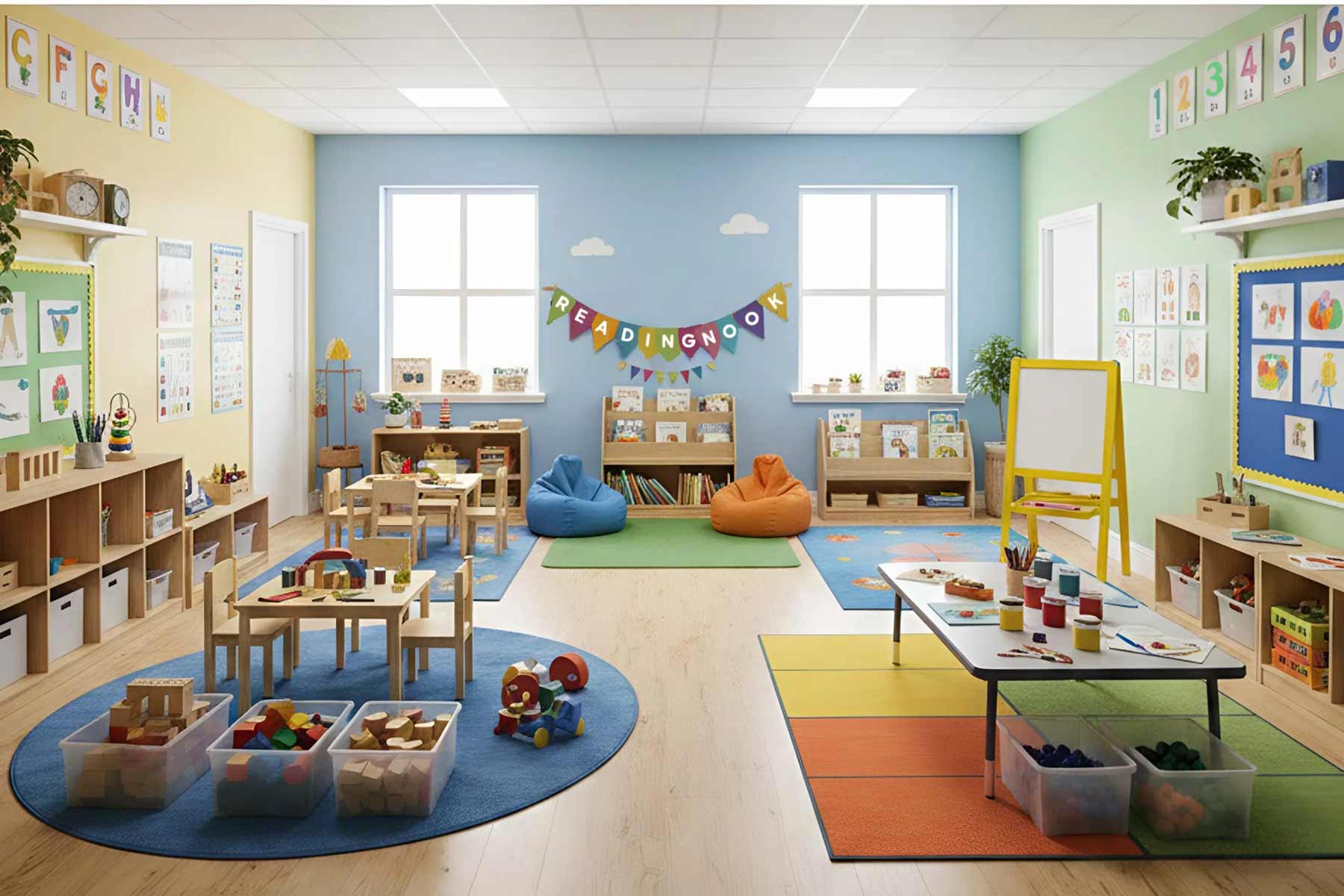
Set up separate learning areas that serve specific purposes. A dramatic play kitchen, a cozy reading nook, a sensory table area, a block-building zone, and an art corner give toddlers variety while teaching them that different spaces have different purposes. Use low shelving units to create natural dividers between zones.
Install child-height storage
Open shelving with clear bins allows toddlers to see their choices and select materials independently. This builds decision-making skills and gives children ownership over their environment. Rotate toys and materials regularly to maintain interest.
Add visual schedules
Include schedules at toddler eye level showing the daily routine with pictures. Simple icon-based schedules help children anticipate transitions and reduce anxiety about what comes next. Reference these visuals throughout the day to reinforce patterns.
Incorporate soft elements
Use rugs, cushions, and fabric wall hangings that reduce noise and create cozy spaces. Toddler rooms get loud quickly. Acoustic panels disguised as artwork, carpet squares under play areas, and fabric canopies over reading nooks all dampen sound while adding visual warmth.
Designate a peace corner
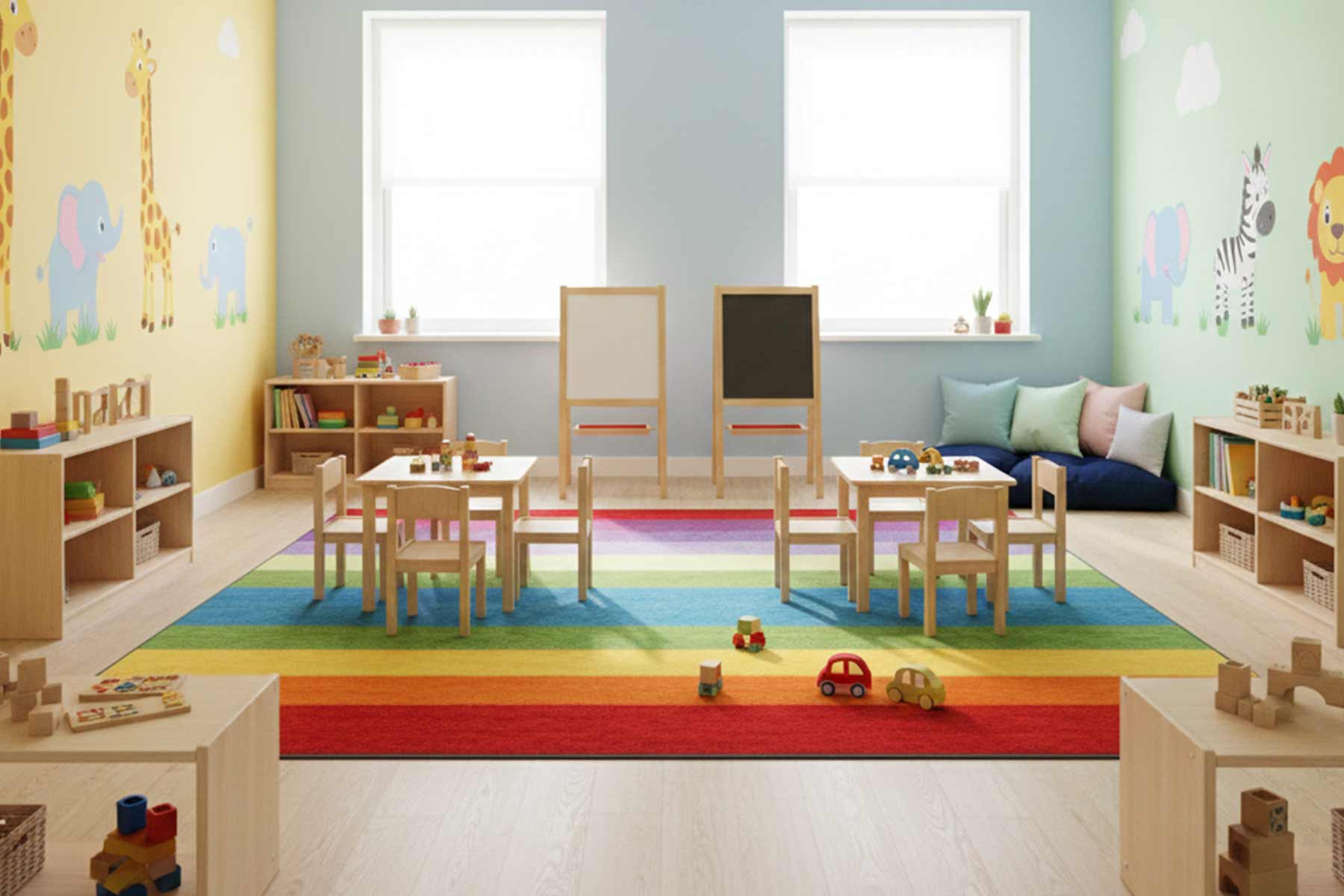
Create a calm space where overwhelmed toddlers can self-regulate. A small tent, a bean bag chair, some soft books, and a feelings chart give children a place to calm down without feeling punished. Teach them this space exists before they need it.
Use nature themes and natural materials
Studies show natural elements reduce stress and improve focus in young children. Wooden toys, woven baskets, plants at safe heights, and nature photography create a calming, grounded atmosphere. Even small touches like wooden blocks instead of plastic ones or woven storage baskets instead of bright plastic bins shift the room's energy toward calm.
Home daycare room ideas for mixed-age groups
Home-based programs face unique challenges since you're adapting residential space for professional childcare. Success comes from strategic choices that maintain a homelike feel while meeting licensing requirements.
Transform living areas thoughtfully
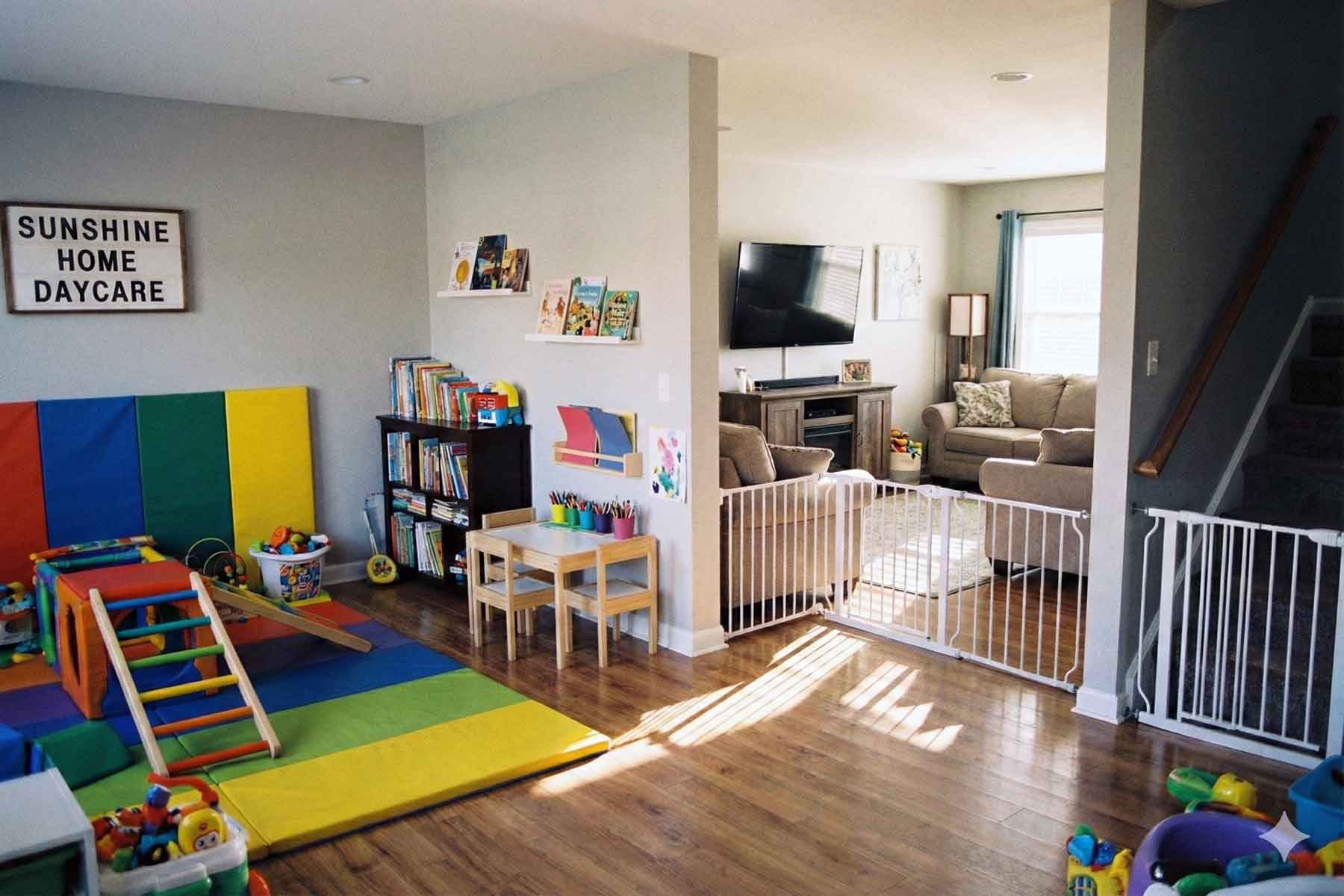
Rethink your living spaces rather than completely erasing their original purpose. A family room can become a play space during business hours with furniture pushed aside and secured. Use baby gates to block off rooms and stairs that aren't part of your licensed space.
Invest in multipurpose furniture
Find furniture that serves different needs throughout the day. A low table works for art projects during creative time, then holds lunch, then becomes a puzzle station. Nesting tables, folding chairs, and rolling carts maximize flexibility in limited space.
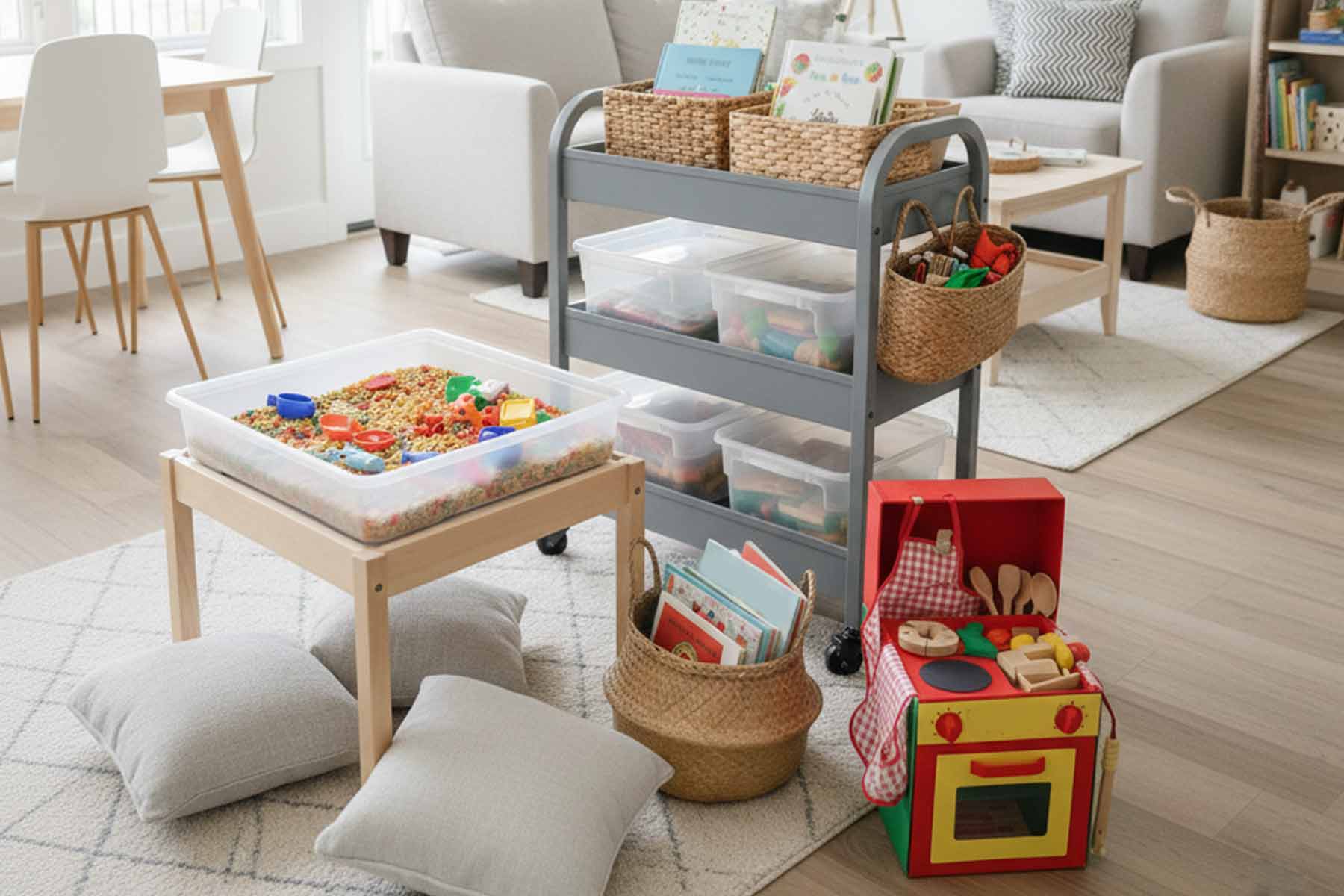
Create portable activity stations
Use bins and baskets that can be set up and taken down quickly. A sensory bin station, a book basket with cushions, or a dramatic play box can transform any room into a learning space when needed.
Designate a nap area
Create a sleep area that feels separate and peaceful. If you have a spare bedroom, this works perfectly. Otherwise, use room-darkening curtains, portable cribs or cots, and a sound machine to create nap conditions in your main play space.
Maximize vertical storage
Since floor space is limited, use wall-mounted shelves, hanging organizers, and over-door storage to keep materials accessible without cluttering walking paths. Install shelving high enough that children cannot reach it for items you need accessible to you but not them, such as cleaning supplies and program paperwork.
Maintain clear separation
Keep program spaces and private family areas clearly separate. Use doors, gates, or curtains to reinforce these boundaries, protecting your family's privacy and helping you maintain professional boundaries.
Creative storage solutions for organized classrooms
Clutter creates chaos in childcare spaces. Strategic storage keeps materials accessible while maintaining a peaceful environment.
Label everything with words and pictures. This helps children begin recognizing symbols, makes cleanup easier, and allows substitute teachers to maintain your organizational system. Include photos of what belongs in each bin.
Use clear storage containers whenever possible. Being able to see contents without opening every box saves time and helps children make selections independently. Choose containers with handles that small hands can grip easily.
Install low, accessible shelving that children can reach without climbing. Anchor all shelving to walls following manufacturer guidelines. Arrange materials you want children to access freely at the lowest levels.
Create daily rotation bins to reduce overwhelm and keep toys feeling fresh. Store extra toys in labeled bins, rotating them into the classroom weekly. This works especially well for puzzles, manipulatives, and dramatic play items.
Add furniture with built-in storage like cubbies, benches with lift-up seats, and tables with shelves underneath. These pieces work double duty, reducing the furniture footprint while increasing storage capacity.
Safety considerations for every daycare space
Beautiful design matters little if your space isn't safe. Build safety into your setup from the start.
Maintain unobstructed sightlines so teachers can supervise all areas simultaneously. This is your most important safety feature. Do regular sightline checks by positioning yourself where teachers typically stand.
Anchor all furniture to walls following manufacturer specifications. Dressers, shelving units, changing tables, and any furniture children might attempt to climb must be secured. Check anchors quarterly to ensure they remain tight.
Cover electrical outlets with safety covers that young children cannot remove. Install sliding outlet covers or outlet plates with spring-loaded mechanisms. Keep all electrical cords concealed or secured along walls.
Use non-toxic materials for everything children might touch, including furniture, paint, decorations, and cleaning supplies. Look for Greenguard certification on furniture and low-VOC designations on paints.
Follow spacing guidelines for cribs, cots, and mats according to your licensing standards. These requirements exist to prevent disease transmission and ensure safe sleep. Post your room's maximum capacity clearly and never exceed it.
Store hazardous materials securely in locked cabinets or drawers that children cannot access. This includes cleaning supplies, medications, and any items that present choking, poisoning, or injury risks.
FAQ about daycare room setup
How much space do I need per child in my daycare?
Most states require at least 35 square feet of usable indoor space per child, though requirements vary. Check your state's licensing regulations for specific guidelines. This measurement doesn't include bathrooms, kitchens, or storage areas. Generous space allows children to move freely and reduces behavioral issues that stem from crowding.
What's the best flooring for daycare rooms?
Durable, easy-to-clean flooring works best in childcare settings. Commercial-grade vinyl, sealed concrete, or low-pile carpet tiles all perform well. Avoid high-pile carpet that traps dirt and bacteria. Use area rugs to define spaces and add warmth while keeping most of the flooring easy to sanitize.
Choose slip-resistant surfaces and avoid throw rugs that create tripping hazards.
Should I use themes in my daycare rooms?
Simple, nature-inspired themes work beautifully without becoming overwhelming. Themes should enhance learning, not distract from it. Avoid character-based or trendy themes that date quickly and can overstimulate children. Think "woodland creatures" rather than "Disney princesses" and "ocean life" rather than "Finding Nemo."
Seasonal rotations keep your space fresh.
Can I combine infant and toddler spaces?
Daycare licensing regulations in most states prohibit or strictly limit combining infant and toddler spaces. Even when allowed, it presents challenges since infants and toddlers have vastly different needs.
If you must combine ages, create clear zones for each group with physical barriers that allow supervision. Never place infant sleep areas where toddlers play actively nearby.
How often should I rotate toys and materials?
Weekly or biweekly rotation prevents boredom without overwhelming children. Some core materials like blocks and dramatic play kitchens can remain constant while smaller items rotate. Watch children's engagement levels as your guide. When interest wanes across multiple items, it's time to refresh your offerings.
Using our proprietary cost database, in-depth research, and collaboration with industry experts, we deliver accurate, up-to-date pricing and insights you can trust, every time.