How much does a flight nanny cost?
How much does a flight nanny cost?
$500 – $1,700 per domestic trip
$3,200+ per international trip
$500 – $850 per standby domestic flight

Average flight nanny cost
A flight nanny typically costs $500 to $1,700 for domestic transport of a pet weighing under 20 pounds within the continental United States. International flight nanny services start at $3,200 or more. Exact pricing depends on the distance traveled, the pet's size, the airline ticket cost, and whether the nanny flies on a confirmed ticket or standby.
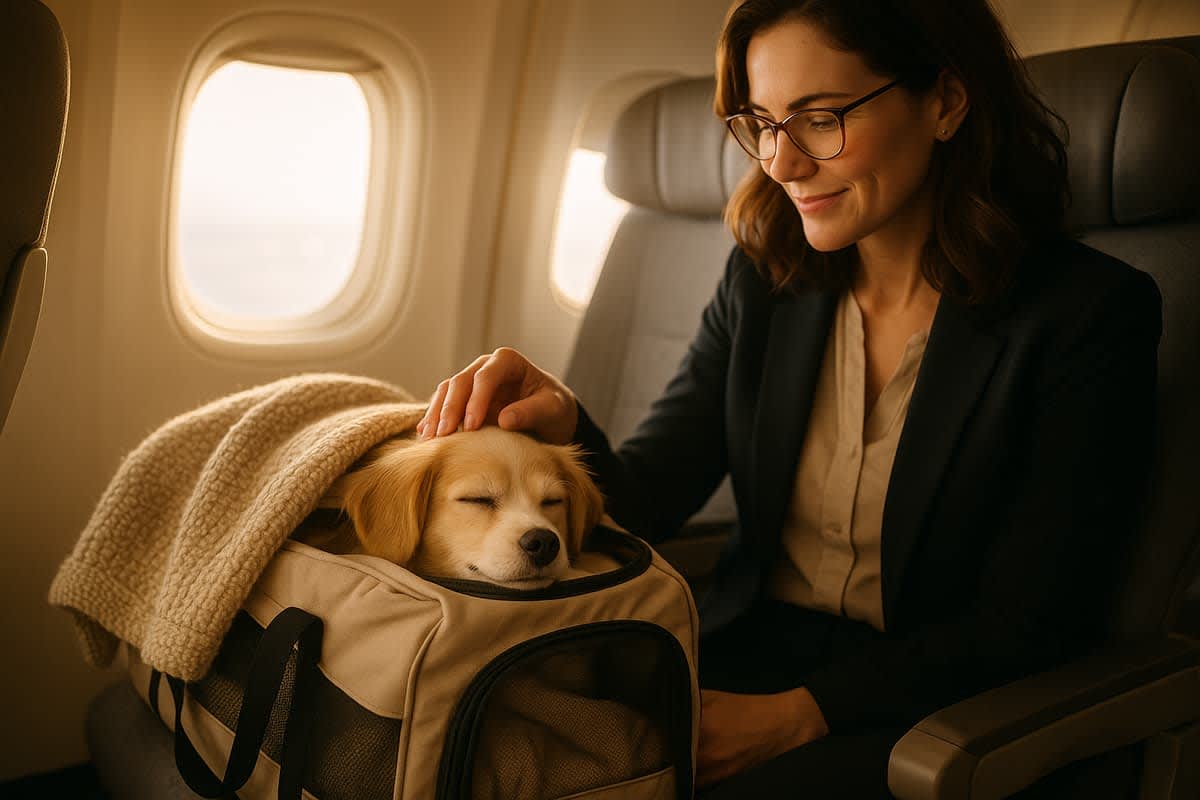
Flight nannies are trained pet transport professionals who carry your puppy, kitten, or small animal in-cabin on a commercial flight, delivering them directly to you at the destination airport. This service has grown in popularity as an alternative to shipping pets through cargo, offering a safer, lower-stress experience for the animal.
| Service type | Average cost |
|---|---|
| Standby domestic flight (under 20 lbs) | $500 – $850 |
| Confirmed domestic flight (under 20 lbs) | $1,200 |
| Confirmed domestic flight (20 – 30 lbs) | $1,700 |
| Confirmed domestic flight (30 – 80 lbs) | $2,300+ |
| International flight (under 17 lbs) | $3,200+ |
Flight nanny cost by pet size
Your pet's weight is the single biggest factor that shifts pricing from one tier to the next. Larger pets require bigger carriers or even an extra purchased airline seat, which significantly increases the total cost.
| Pet weight | Carrier requirement | Typical cost |
|---|---|---|
| Under 20 lbs | Standard in-cabin carrier | $500 – $1,200 |
| 20 – 30 lbs | Larger carrier; second seat often required | $1,700+ |
| 30 – 80 lbs | No carrier; pet walks on with an extra seat | $2,300+ |
Most flight nanny services specialize in pets under 20 pounds because that is the standard airline limit for in-cabin travel. Pets in this range fit comfortably in an approved carrier that slides under the seat in front of the nanny.
For pets weighing 20 to 30 pounds, select airlines allow a second seat to be purchased to accommodate a larger carrier. This extra ticket cost gets passed along to the customer, pushing the total to around $1,700.
Extra-large pets between 30 and 80 pounds are the most expensive to transport. Only a handful of airlines permit dogs of this size in-cabin, and the pet typically boards the plane without a carrier. Expect to pay $2,300 or more for this premium service.
Factors that affect flight nanny cost
Several variables determine your final price beyond the pet's weight. Understanding these factors helps you budget accurately and avoid surprises.
| Factor | Impact on cost |
|---|---|
| Flight distance | Longer routes mean higher airfare, raising the total |
| Standby vs. confirmed ticket | Confirmed tickets cost $300 – $700 more |
| Time of year | Holiday and summer travel increases airfare |
| Airport location | Smaller regional airports may cost more or require ground transport |
| Pet species | Dogs, cats, and rabbits are commonly accepted; exotic pets may incur extra fees |
| Number of pets | Transporting two pets on one trip may add $200 – $400 |
| Required paperwork | Health certificates and documentation fees can add $50 – $200 |
Flight distance and airfare
The cost of the airline ticket is built into most flight nanny quotes. A short domestic hop from Dallas to Houston will be significantly cheaper than a cross-country flight from New York to Los Angeles. When airfare spikes during peak travel seasons, your flight nanny fee will rise accordingly.
Airport accessibility
Most flight nanny services operate out of major airports in the continental 48 states. If the breeder or buyer is located near a smaller regional airport, the nanny may need a connecting flight or ground transportation to complete the delivery. This added complexity increases the overall cost.
Booking timing and season
Booking well in advance helps lock in lower airfare. Last-minute requests can drive prices up substantially. Summer months, holidays, and weekends tend to have higher flight costs, which directly impacts the total fee.
Standby vs. confirmed flights
Flight nanny services generally offer two booking options: standby travel and confirmed (pre-purchased) tickets. The choice between them affects both cost and reliability.
| Booking type | Cost range (under 20 lbs) | Pros | Cons |
|---|---|---|---|
| Standby | $500 – $850 | Lower cost | No guaranteed seat; possible delays |
| Confirmed ticket | $1,200+ | Guaranteed seat; reliable schedule | Higher cost |
Standby flights are cheaper because the nanny does not purchase a ticket in advance. Instead, they wait for an open seat on a flight. This can work well on less busy routes, but there is a real risk of delays if flights are oversold or canceled.
Confirmed ticket services cost more but guarantee a specific flight and seat. This option is recommended for buyers who need their pet delivered on a specific date, or for breeders who want to minimize the time a young puppy spends in transit.
Most flight nanny services require a non-refundable deposit to process your delivery request. This deposit, often $100 to $300, is applied toward the total balance. If the service cannot complete delivery within the agreed timeframe (typically five days of the requested date), the deposit is usually refundable.
International flight nanny cost
International flight nanny services start at $3,200 and can go significantly higher depending on the destination, flight duration, and import regulations of the receiving country.
| Route type | Pet weight limit | Starting cost |
|---|---|---|
| International (in-cabin) | Under 17 lbs | $3,200+ |
| International (larger pets) | Case by case | $4,000+ |
International transport is more expensive for several reasons. Airfare on international routes is higher, and the nanny may need to spend additional time coordinating customs paperwork, health certificates, import permits, and quarantine documentation. Some countries require specific vaccinations or microchipping before entry, adding to the timeline and cost.
Booking early is particularly important for international flights, as ticket prices fluctuate more dramatically and documentation requirements can take weeks to complete.
What's included in flight nanny services
Reputable flight nanny services include several essentials in their quoted price. Understanding what you are paying for helps you compare providers and spot any hidden fees.
| Included service | Details |
|---|---|
| Sanitized pet carrier | A new or thoroughly cleaned airline-approved carrier is provided |
| Food and water | The nanny carries breeder-supplied food and fresh water for the journey |
| In-flight monitoring | The nanny sits with your pet throughout the entire flight |
| Photo and video updates | Real-time pictures and videos are sent during the trip |
| Communication | Flight numbers, departure times, and arrival details are shared with the buyer |
| Airport-to-airport delivery | The nanny hands the pet directly to you at the destination airport |
| Required documents | Health certificates and travel paperwork travel with the pet |
Some premium services also include door-to-door delivery, where the nanny arranges ground transportation from the airport to your home. This typically costs an additional $50 to $150 depending on the distance from the airport.
Flight nanny vs. cargo shipping
Pet owners often weigh the decision between hiring a flight nanny and shipping their pet through airline cargo. While cargo is generally cheaper, the flight nanny option provides significant advantages in terms of safety and comfort.
| Feature | Flight nanny | Cargo shipping |
|---|---|---|
| Cost | $500 – $2,300+ | $200 – $600 |
| Travel location | In-cabin with the nanny | Pressurized cargo hold |
| Human supervision | Constant | None during flight |
| Stress level for pet | Low | Moderate to high |
| Temperature control | Cabin-regulated | Pressurized but variable |
| Weight limit | Up to 80 lbs (select airlines) | No practical limit |
| Updates during travel | Photos and videos in real time | None |
| Seasonal restrictions | Fewer restrictions | Embargoes during extreme heat or cold |
Cargo shipping is subject to seasonal embargoes. Many airlines refuse to transport animals in the cargo hold when temperatures at departure, arrival, or layover airports exceed 85°F or drop below 45°F. Flight nannies avoid this issue entirely because the pet travels in the climate-controlled cabin.
Young puppies under 8 weeks old or very small breeds are particularly vulnerable during cargo travel. For these animals, a flight nanny is often the safer choice, even at a higher price point.
Short-nosed breeds like bulldogs, pugs, and Persian cats face higher respiratory risks during cargo transport. Many airlines have banned these breeds from cargo entirely. A flight nanny is often the only air travel option for brachycephalic pets.
Tips for saving on flight nanny costs
Flight nanny services are a premium expense, but there are practical ways to reduce the cost without compromising your pet's safety.
- Book early. Advance booking locks in lower airfare, which directly reduces the nanny's total fee.
- Choose standby when possible. If your timeline is flexible, standby travel can save $300 to $700 compared to confirmed tickets.
- Fly midweek. Tuesday and Wednesday flights tend to have lower airfare than weekend flights.
- Use major airports. Flying into a large hub airport gives nannies more flight options and typically lower fares.
- Ask about shared flights. Some nanny services transport multiple pets on one trip and may offer a small discount per pet.
- Compare multiple providers. Prices vary significantly between services. Request quotes from at least three companies before booking.
- Avoid peak travel seasons. Holiday weekends and summer months drive up airfare across the board.
Frequently asked questions
Is a flight nanny safe for my puppy?
Yes. A flight nanny carries your puppy in-cabin in an airline-approved carrier, seated right next to them for the entire flight. Reputable nanny services are licensed, insured, and often registered with the USDA. The pet receives constant monitoring, food, water, and comfort throughout the journey.
What is the weight limit for a flight nanny pet?
Most flight nanny services accommodate pets up to 20 pounds in a standard in-cabin carrier. Some services transport pets up to 80 pounds by purchasing an additional seat on select airlines that allow larger dogs in-cabin. Pets over 80 pounds generally need ground transport or cargo shipping.
Do I need to pay a deposit?
Almost all flight nanny services require a non-refundable deposit to begin processing your request. This deposit typically ranges from $100 to $300 and is credited toward the total fee. If the nanny cannot complete the delivery within the agreed timeframe, most services will refund the deposit.
What types of animals can a flight nanny transport?
Flight nannies most commonly transport puppies, kittens, and small dogs. Some services also accept cats of all ages and rabbits. Exotic animals, reptiles, and birds are generally not eligible for in-cabin flight nanny services due to airline restrictions.
How long does the delivery take?
A domestic flight nanny delivery typically takes one day, depending on the route and any layovers. The nanny picks up the pet from the breeder or seller, travels to the airport, flies to the destination, and hands the pet directly to the buyer. International deliveries can take two or more days due to customs processing and longer flights.
How do I choose a reputable flight nanny?
Look for services that are licensed, insured, and ideally registered with the USDA or state Department of Agriculture. Read reviews from previous customers. Ask about their communication practices, as a reliable nanny will provide real-time updates with photos and videos. Confirm whether they fly standby or on confirmed tickets so you understand the risk of delays.
Does the breeder or the buyer pay for the flight nanny?
In most cases, the buyer pays for flight nanny services. This cost is separate from the purchase price of the pet. Some breeders include transport in their pricing or arrange the booking on the buyer's behalf, but the transport fee is almost always the buyer's responsibility.